
ArrivesBy Blog
Why Accurate Delivery Dates Increase Conversion (Even When Shipping Isn’t Fast)
Faster shipping can help with the first purchase. Accurate delivery dates help with every purchase after that. Here’s why accuracy matters more than speed.
Intro
Fast shipping gets attention.
But delivery accuracy is what builds long-term customers.
Many Shopify merchants assume that improving delivery messaging means promising faster timelines. Shorter delivery windows feel like they should help win more orders.
In the short term, that can be true.
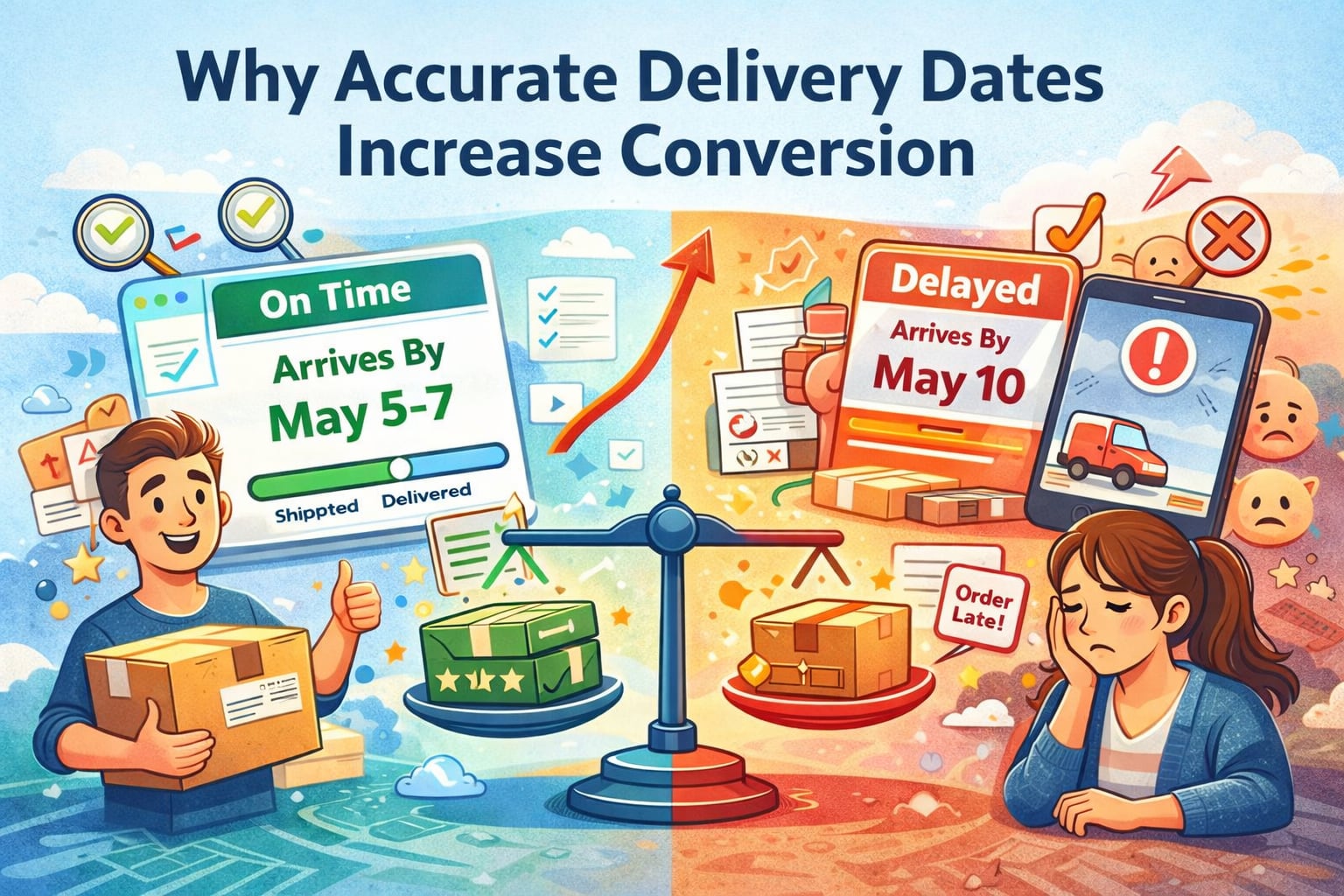
But shoppers aren’t just buying a product — they’re buying an experience. Delivery dates that promise fast arrival and don’t follow through damage trust and hurt the overall experience. When that happens, customers are far more likely to look elsewhere next time.
Repeat customers are the backbone of many online stores. It’s far easier to sell again to someone who already trusts you than to convince a new shopper to take a chance.
I saw this clearly in my own store. Some products took weeks to prepare and ship, and customers were fine with that when we were upfront about timing. They were willing to wait when expectations were clear. But when we promised two-day delivery like Amazon and failed to deliver, they noticed.
Those misses didn’t just create frustration. They changed how customers felt about buying from us again.
This post explains why accurate delivery dates outperform overly optimistic ones in the long run, how shoppers interpret delivery promises over time, and why accuracy is what keeps customers coming back — even when shipping isn’t lightning fast.
Speed vs certainty
Merchants tend to think about delivery in terms of speed.
Shoppers tend to think about delivery in terms of certainty.
That difference matters.
A message like “Ships in 1–2 business days” sounds fast, but it asks shoppers to do extra work. They have to translate what that means for their situation: weekends, holidays, location, and whether shipping starts today or tomorrow.
That ambiguity becomes especially costly during critical moments like the holidays.
When a shopper is ordering a gift, they’re not looking for an estimate they have to interpret. They’re looking for reassurance that it will arrive on time. In those moments, you can’t hide behind “business days” or expect customers to understand the fine print. If you imply something will arrive before a specific date, it needs to actually do so.
A specific delivery date removes that burden.
When a shopper sees “Arrives by Dec 22–24,” they don’t need to calculate anything or guess how holidays factor in. They can immediately decide whether that timing works for them. And for that confidence to persist through checkout, delivery dates need to stay visible across the full buying journey.
That clarity is what builds confidence.
Speed can influence a decision, but only when it’s believable. Accuracy is what makes a delivery promise feel intentional, trustworthy, and safe — especially when timing truly matters.
Why overly optimistic delivery promises backfire
Overly optimistic delivery promises can work at first.
When a product isn’t unique, faster delivery often becomes the deciding factor. Shoppers believe the promise and choose the store that looks quickest.
This is especially common in dropshipping. The same product is often sold by multiple stores at similar prices, which makes delivery timing one of the few visible differentiators.
I saw this in my own business. Customers would compare our products across several sites, and when we positioned ourselves as faster, some buyers chose us specifically because of the delivery date we showed.
That worked — until we missed it.
When a customer chooses you because you promised faster delivery, expectations are immediately higher. A late order doesn’t feel like a minor delay. It feels like a bad decision.
I remember customers saying things like, “If I’d ordered from the other site, I would’ve had it already. Where’s my tracking number?”
That kind of regret almost guaranteed they wouldn’t come back. Even if the order eventually arrived, the trust was gone. And once a customer feels they chose wrong, they’re very unlikely to give you a second chance.
Why accuracy matters most after the purchase
The real impact of a delivery promise doesn’t show up while a shopper is making their purchase.
It shows up after the order is placed.
At that point, you’ve made a commitment. You’ve told the customer when they’ll receive their order, and now it’s up to you to keep that promise.
This becomes especially important during critical moments like the holidays. When timing matters, there’s no room to hide behind vague language or assumptions. The date you show is the date the customer expects.
If you keep that promise, nothing dramatic happens. There’s no celebration and no thank-you message. The customer is quietly satisfied and moves on.
If you break that promise, the experience changes completely.
A late delivery doesn’t just affect that one order. It reshapes how the customer thinks about your store. Even if they like the product, they remember that it arrived late. That missed expectation becomes part of your brand in their mind.
This is why accuracy matters more than speed over time. Kept promises build trust.
When you earn that trust, you stop being just another online store. You become a business your customer feels safe coming back to again and again.
Why most stores don’t know how accurate their delivery dates are
One thing I’ve seen repeatedly — both running my own store and working with other Shopify businesses — is that most stores don’t actually know whether their delivery estimates are accurate.
They may have a general sense. They hear about problems when something goes wrong. But very few have a clear view of how often orders actually arrive within the window they promised.
Without that visibility, delivery dates are usually based on assumptions:
- What usually happens
- What feels safe to show
- What hasn’t triggered complaints recently
That lack of measurement can hide issues that quietly hurt the business:
- Customers choose a competitor because your delivery promise looks slower — even though you usually deliver faster.
- Some products consistently arrive earlier or later than others, but no one notices the pattern.
- A vendor starts shipping more slowly, and estimates don’t adjust until customers complain.
Without real numbers, there’s no feedback loop. You’re flying blind.
A store might believe its delivery promises are reasonable, while customers are quietly experiencing delays — and adjusting their expectations, or deciding not to come back.
Accuracy can’t improve if it isn’t measured.
How accurate delivery dates compound trust over time
Stores that track delivery accuracy gain something more valuable than fewer support tickets and reduced WISMO (“Where is my order”) requests.
They gain clarity.
When you can see how often your estimates are met, you can adjust them intentionally. You can tighten timelines where you’re consistently early, and add buffer where reality demands it.
Over time, this creates a virtuous cycle:
- Delivery promises become more reliable
- Customer experiences become more consistent
- Trust compounds with each fulfilled order
This is where delivery dates stop being marketing copy and start becoming infrastructure.
In my experience, the difference between stores that struggle with delivery expectations and those that don’t isn’t speed. It’s awareness. Knowing whether you’re keeping your promises — and being willing to adjust when you’re not.
Tools that track delivery performance make this possible. Without them, stores are guessing. With them, accuracy improves naturally over time.
Conclusion
Faster shipping can help win a first purchase.
Accurate delivery dates help win trust.
When delivery promises are realistic and consistently met, shoppers feel confident buying — even when shipping isn’t fast. When promises are overly optimistic and missed, the cost isn’t just a late order. It’s damage to how customers perceive your brand.
Accuracy reduces hesitation, protects trust, and supports conversion at the moments that matter most.
For stores that want delivery promises to work as a long-term asset instead of a liability, accuracy matters more than speed.
If you want delivery dates that stay accurate as your store grows, there are tools designed to handle that complexity automatically, like ArrivesBy.