
ArrivesBy Blog
Delivery Dates on Shopify: How to Keep Them Accurate as Your Store Scales
Adding delivery dates to Shopify is easy at first. Keeping them accurate as your store grows is harder. Here’s how merchants should think about delivery dates from day one.
Intro
In our last article, we discussed why your store needs delivery estimates.
We also showed a simple way to add ETAs to your store using Sidekick.
That approach is a great way to get started. But as your store grows and your catalog expands, edge cases begin to appear. What once felt simple can quickly become fragile.
This post walks through the common ways delivery dates are handled today, where they tend to break down, and how to think about choosing an approach that will hold up as your store scales.
How most stores start with delivery dates
For small stores, a simple approach often works.
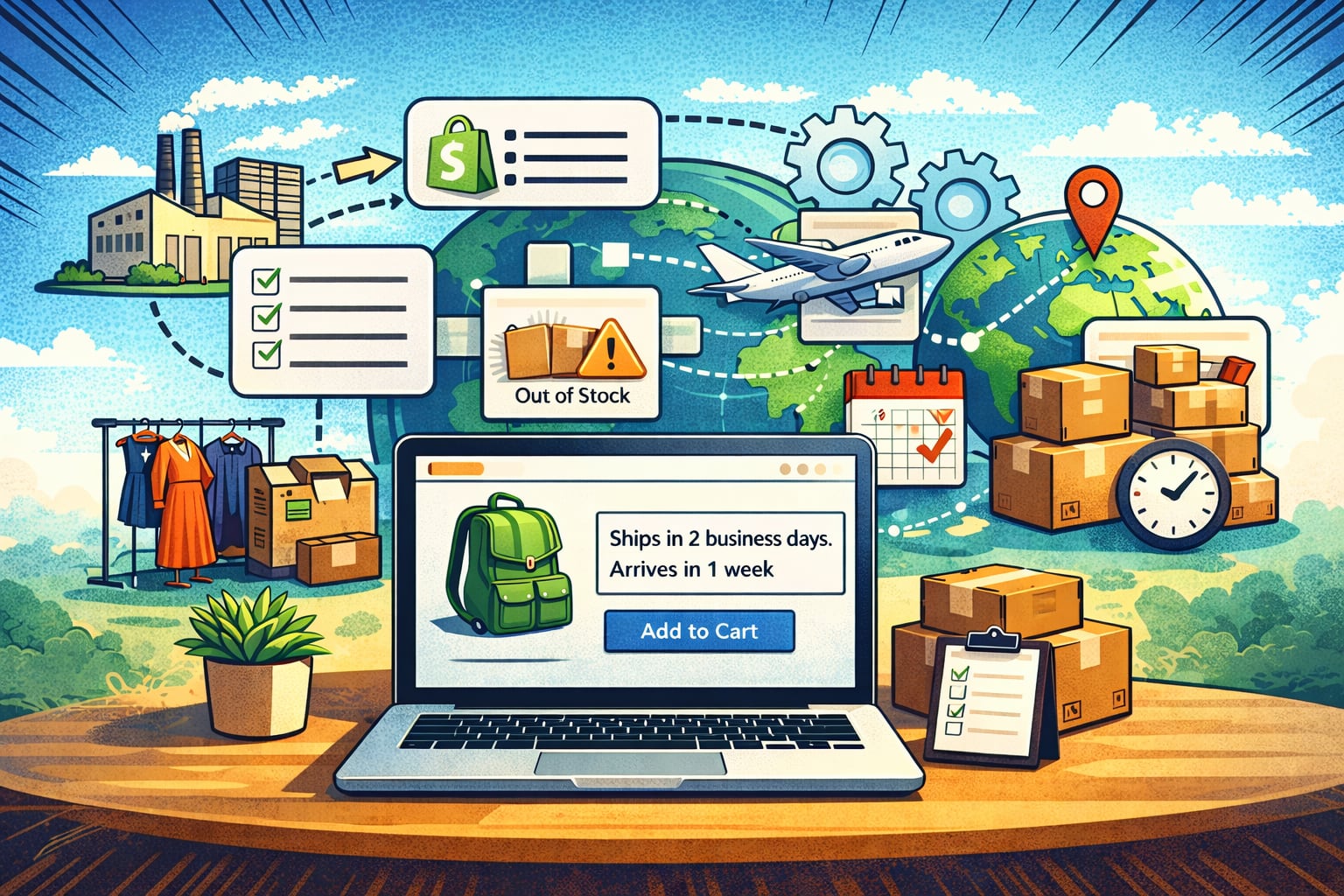
Static delivery messaging or basic theme edits can be enough. If you’re managing a small catalog and you or your fulfillment partner consistently ship orders within two business days, adding something like “Ships in two business days, arrives within one week” to your product template can be a perfectly reasonable starting point.
That’s exactly how I started when I was running my own store, and for a while, it worked well.
One thing I didn’t expect was how closely customers paid attention to those promises. When we missed a shipping commitment, I’d often get emails from customers asking why their order hadn’t shipped yet. That was a clear signal that delivery timing wasn’t just background information. Shoppers were actively factoring it into their purchase decision.
That was my “aha” moment.
Accurate delivery estimates, and actually sticking to them, weren’t just nice to have. They could be a real differentiator for my store.
Where Shopify-native solutions start to break
As your store grows, that simple setup can start to show cracks.
What used to be a single, predictable flow turns into a mix of edge cases:
- Different vendors ship on different timelines
- Custom-made products need extra preparation time
- International shipping adds variability
- Holidays delay fulfillment
- Products go out of stock and need time to restock
A hard-coded solution can still work, but it becomes harder to maintain as these cases stack up.
I remember trying to manage this with an elaborate system of product tags and custom Liquid. It technically worked, but it was a constant source of friction. I’d forget to tag new products, miss updates when inventory changed, or overlook one edge case that quietly broke the logic elsewhere.
What started as a simple theme edit to show an ETA slowly turned into a fragile system that required constant attention to keep accurate.
This is the kind of complexity most merchants underestimate. These little edge cases and assumptions build up as you grow and before you know it, accurate estimates seem like more trouble than they’re worth.
What “accurate delivery dates” require
At scale, delivery accuracy isn’t about showing the right text. It’s about having systems in place to manage growing complexity.
From running my own store and working with Shopify merchants, a few things consistently matter:
-
Rule-based handling of special cases Different products, vendors, and variants often need different delivery logic.
-
Awareness of inventory and fulfillment state Stock levels, backorders, and fulfillment timing all affect what you can realistically promise.
-
Location-based logic Shipping times change based on where an order is going, sometimes significantly.
-
Consistent messaging across the funnel Delivery expectations should line up on the product page, in the cart, at checkout, and after purchase.
When these pieces work together, delivery estimates stay accurate throughout the buying journey. More importantly, they’re promises you can confidently keep.
Choosing an approach that won’t collapse later
There’s no single right solution for every store.
What matters is choosing an approach that matches where you are today and where you’re headed. Simple delivery messaging can work early on, when catalogs are small and fulfillment is predictable.
As stores grow, accuracy becomes harder to maintain with manual or hard-coded solutions. At that point, more dynamic systems tend to hold up better because they adapt as complexity increases.
From my experience, the moment you start noticing special cases or workarounds creeping in, it’s usually a sign that a more structured, app-based approach is worth considering.
Conclusion
Adding delivery dates to your Shopify store is easy. Keeping them accurate over time is the real challenge, especially as your store grows and your operations become more complex.
Stores that treat delivery timing as infrastructure rather than copy are better positioned to scale without losing customer trust.
The earlier delivery accuracy is designed into the buying journey, the less friction it creates later as products, inventory, and markets expand.
For stores that want delivery dates to stay accurate as complexity grows, ArrivesBy is designed to handle that automatically.